

Southeast Asia evokes for many people pristine beaches, breathtaking rice terraces, and exceptional gastronomy. But behind these postcard images lies an equally fascinating reality: a profound, living Islamic heritage with a spiritual richness just waiting to be discovered. Asia as a muslim is so great.
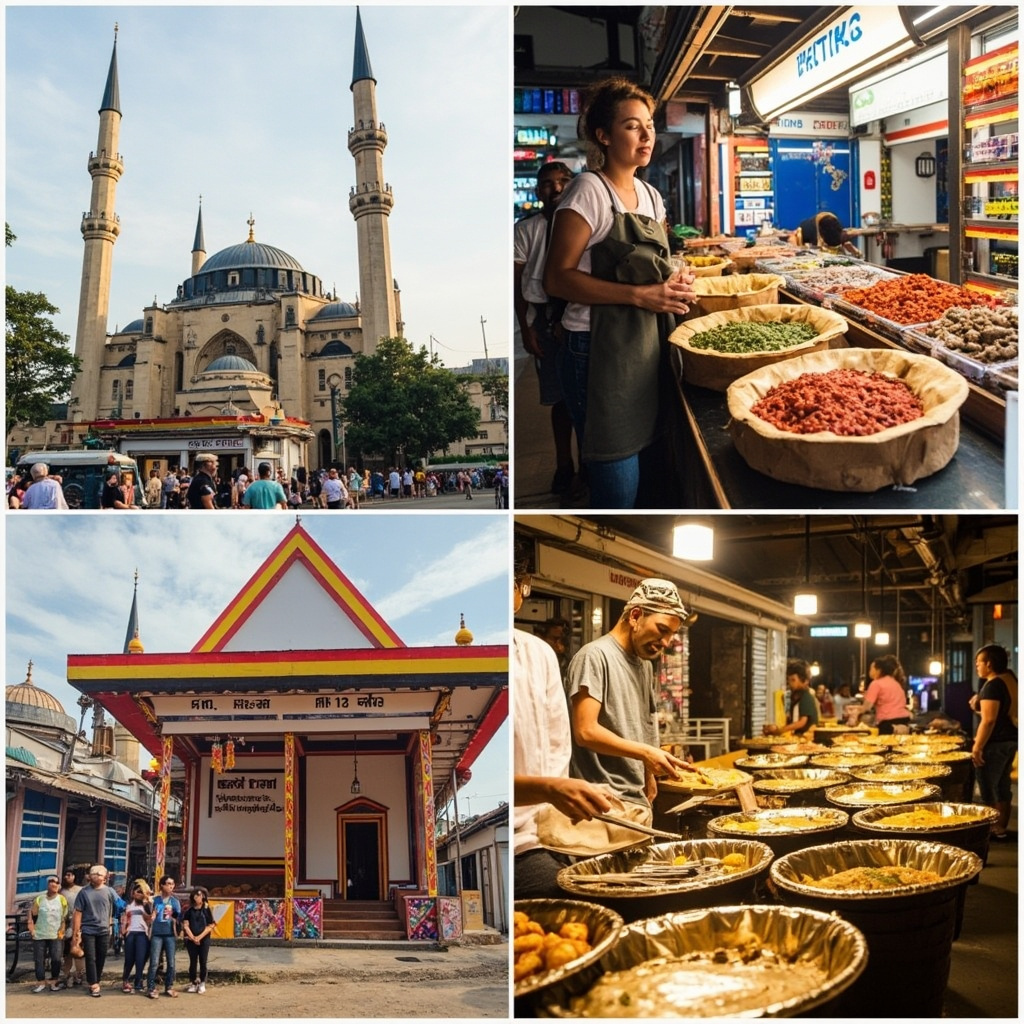
From Indonesia — the country with the largest Muslim population in the world — to officially Islamic Malaysia, through southern Thailand and the islands of the Sunda archipelago, including Indonesia, Islam has woven itself into the daily fabric of these societies with remarkable authenticity.
The lesser-known history of Islam in Southeast Asia
Islam did not arrive forcefully in Southeast Asia. It slipped in gently, along maritime trade routes from the 8th century onward. Arab, Persian, and Indian merchants who sailed along the coasts of Sumatra, Java, and Malacca brought their faith with them. No sword, no conquest — an Islam of trade, exchange, and coexistence with local populations.
The first Islamic state in the region, the Sultanate of Pasai in Sumatra, was founded in the 13th century. From Taj al-Mulk to the Sultanate of Malacca in the 15th century, Islam gradually became the dominant religion. Malacca became the radiant center of a commercial Islam that spread to the Philippines, Borneo, and the Moluccas.
A sacred architecture of stunning beauty
The mosques of Southeast Asia are a wonder. They resemble no other: neither Arab, nor Ottoman, nor Persian. They are the fruit of a synthesis between local architectural forms and the requirements of a Muslim place of prayer.
- Masjid Istiqlal (Jakarta, Jakarta halal guide) — largest mosque in Southeast Asia, modern architecture, built facing the Catholic cathedral, symbol of interreligious coexistence
- Masjid Sultan (Kampong Glam, Singapore) — golden domes and Ottoman architecture in the heart of the historic Malay quarter
- Masjid Jamek (Kuala Lumpur, Malaysia) — oldest mosque in KL, Indo-Moorish style, at the confluence of two rivers
- Masjid Raya Baiturrahman (Banda Aceh, Indonesia) — symbol of resilience after the 2004 tsunami, gift from the Ottoman Sultan
- Masjid Menara Kudus (Central Java) — minaret inspired by Hindu Borobudur temples, unique architectural fusion
An everyday and accessible Islam
What strikes the Muslim traveler in Southeast Asia is the disconcerting ease of practicing their faith. The call to prayer resounds in cities and countryside alike. Mosques are everywhere — in airports, shopping centers, tourist areas.
In Indonesia, markets are halal by default. In Malaysia, JAKIM-certified restaurants are legion. In southern Thailand, mosques have punctuated the daily life of Islamic communities for centuries.
The treasures of Indonesian Islam
Aceh is the heart of Indonesian Islam. The most pious province in the country, where Sharia law is applied. Its mosques are of stunning beauty and the landscape between volcanoes and rice terraces is breathtaking.
Central and East Java offers a more syncretic Islam. Yogyakarta, with its still-active Sultanate, embodies this richness — temporal and spiritual power coexisting in unique harmony.
Malaysia: State Islam, Everyday Islam
In Malaysia, Islam is the official religion. Halal restaurants are clearly identified, JAKIM standards are strict, and religious practice is respected in public space. Kuala Lumpur symbolizes this Islamic modernity: the Petronas Towers neighbor the national mosque, the MRT has its own musholla spaces.
Singapore: Religious diversity in action
Singapore is perhaps the finest example of religious coexistence in the region. Kampong Glam, the historically Malay quarter of the city, is dominated by Masjid Sultan. A few streets away, a Catholic church, a Hindu temple, and a Buddhist pagoda coexist in rare tolerance.
Why leave now?
Southeast Asia is at a turning point in its tourist history. Infrastructure is modernizing, but the soul remains authentic. Prices remain accessible, halal food is everywhere, and mosques — from Jakarta to Kuala Lumpur — are open to visitors. It is a destination where the Muslim traveler can feel serene without effort. Discover more about tourism across Southeast Asia.
Our guides by destination for Muslim Friendly travel
- Indonesia — Jakarta, Lombok, Yogyakarta, Bandung
- Malaysia — Kuala Lumpur, Langkawi, Penang
- Singapore — Kampong Glam, Masjid Sultan
- Japan — Tokyo Camii and halal food
- Southern Thailand — Hat Yai, Pattani, Satun
🛒 Prepare your Muslim Friendly trip to Asia
To prepare your halal itinerary in Indonesia, Malaysia and beyond
Amazon Associate links — wayang-21 · Sponsored
🕌 Umrah in transit — a reality for Muslim travelers
Do you live in France or Europe and wish to perform Umrah? It is now accessible without a dedicated trip — via a layover in Saudi Arabia on a flight to Asia. Our UmrahOnTheGo guide explains everything: e-tourist visa, steps in Jeddah, Haramain train, Tawaf and Sa’i.
🔧 Connected home: Automate your home with a local AI assistant. Compare solutions on Lunarok-domotique.com and discover Domobayt.com for a smart home.
Book your activities in Asia:
• Excursions and guided tours on Klook → (*)
• Mosque tickets and Islamic sites on Klook → (*)
Guided tours with GetYourGuide:
• Discovery tours on GetYourGuide → (*)
• Halal experiences in Asia on GetYourGuide → (*)
SIM and eSIM for traveling in Asia:
• Asia Halo eSIM — unlimited data on Airalo → (*)
Also read on AsieHalal:
• Japan halal: Muslim traveler guide → (*)
• Indonesia halal: temples and gastronomy → (*)